
When to See a Doctor About Your Child’s Cold
At a glance: This article helps you understand when a child’s cold can be managed at home and when it needs a doctor’s visit. You’ll find common symptoms, red flags to watch for, guidance on feeding and hydration, and simple steps to help your child feel better while staying safe during cold season.
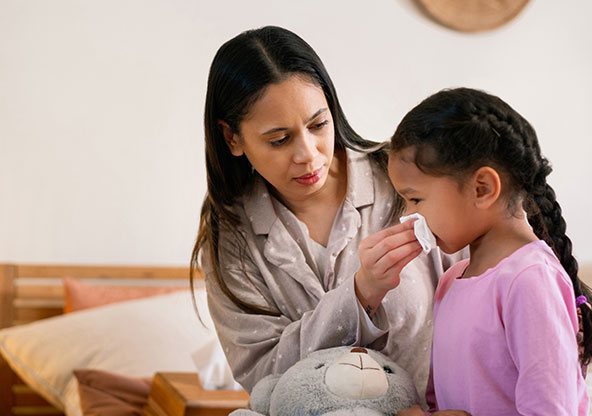
Every parent knows the feeling: your child wakes up with a stuffy nose, a cough, or a low-grade fever and you start wondering, Is this just a cold, or is it something more?
Learn When to See a PediatricianThe common cold is one of the most frequent illnesses in childhood. In fact, children under age six can have six to eight colds a year, especially during fall and winter.
Most of these infections are mild, self-limiting, and caused by viruses like rhinovirus, RSV, the seasonal coronaviruses, and more. While most colds get better with rest and supportive care at home, there are times when you should reach out to a healthcare provider.
What Causes a Child's Cold?
Colds are viral infections of the upper respiratory tract. More than 100 different viruses can cause them, but the most common are:
- Rhinoviruses (cause up to 50 percent of colds)
- Respiratory syncytial virus (RSV)
- Seasonal coronaviruses
- Influenza viruses
- Parainfluenza viruses
- Adenoviruses
- Enteroviruses
- Human metapneumovirus
These viruses spread easily through droplets in the air, close contact, and touching contaminated surfaces. Young children, especially those in daycare or school, are frequently exposed to these viruses.
Typical Cold Symptoms in Children
Cold symptoms vary by age, but common signs include:
In infants
- Fever
- Runny or stuffy nose
- Fussiness
- Difficulty trying to eat
- Trouble sleeping
In preschool and school-aged children
- Stuffy nose
- Runny nose (often becomes yellow or green as the immune system responds)
- Cough
- Sneezing
- Sore throat
- Mild headache
- Low-grade fever
Cold symptoms often peak around day 2–3 and can last 10–14 days longer than most parents expect.
Read About the Stages of a Common Cold
When You Can Care for a Child's Cold at Home
Most colds do not require a doctor’s visit. Supportive care—such as rest, fluids, nasal saline and a cool-mist humidifier—is usually enough.
Home care is appropriate when:
- Your child is breathing comfortably
- Symptoms are improving gradually
- Fever is low-grade and short-lived
- Cough is mild and not worsening
- Your child is eating, drinking, and playing close to normal
When to Call Your Child’s Doctor
A cold can sometimes lead to other infections—such as ear infections, sinusitis, or pneumonia—and those need medical evaluation.
Contact your pediatrician if you notice any of the following:
1. Fever That Is Concerning
- Fever ≥102.2°F (39°C)
- Fever lasting more than 3 days
- A new fever that appears after the cold seemed to be improving
(This may indicate a secondary infection.)
2. Symptoms Lasting Too Long
- Nasal congestion or discharge lasting more than 10 days with no improvement
(possible sinus infection) - Cough that worsens or does not improve after 2 weeks
Learn if a Sinus Infection is Contagious
3. Symptoms That Suddenly Get Worse
- Increased nasal discharge or worsening cough
- New onset of fever
- Child appears more tired, irritable, or uncomfortable
4. Signs of Ear Infection
- Tugging at ears
- New fever after cold symptoms
- Ear pain or fussiness, especially at night
Learn How to Prevent Ear Infections
5. Breathing Concerns (always urgent)
Breathing changes are one of the most important signs to watch when your child has a cold. Congestion, mucus, and coughing can make breathing sound worse than it is – but certain signs indicate your child needs medical attention.
- Fast, labored, or noisy breathing
- Wheezing
- Flaring nostrils
- Chest retractions (“pulling in” around ribs)
- Blue-tinted lips or skin
These symptoms require same-day evaluation.
Normal breathing during a cold: A stuffy noisy nose, occasional cough, mildly faster breathing when they have a fever, brief periods of cough-related “catching their breath”.
6. Dehydration
Seek care if your child is:
- Not drinking well
- Producing fewer wet diapers
- Crying without tears
- Having a dry mouth
7. Eating and Drinking Concerns
A decreased appetite is common during a cold, but certain changes mean your child may need medical attention. Call your pediatrician if your child is:
- Refusing to drink or only taking tiny sips
- Unable to keep fluids down
- Showing no interest in eating for more than a day
- Struggling to feed due to congestion, especially infants
- Eating so little that their energy level drops noticeably
Young children can become dehydrated quickly, so trust your instincts if your child seems weaker, sleepier, or isn’t feeding the way they usually do.
8. Infants Under 3 Months
Any fever ≥100.4°F (38°C) in a newborn or young infant should be evaluated immediately.
Possible Complications of a Cold
Most colds resolve without problems, but sometimes a virus can lead to:
- Acute otitis media (ear infection)
- Acute bacterial sinusitis
- Wheezing or asthma flare-ups
- Pneumonia (uncommon but serious)
- RSV bronchiolitis in children under age two
- COVID-19, which can mimic or worsen cold symptoms
Additionally, certain complications related to COVID-19—such as MIS-C—require urgent medical care but remain rare.
Does Your Child Have an Asthma Action Plan?
How Doctors Diagnose a Cold
Diagnosis is usually based on:
- Your child’s symptoms
- Physical exam findings
- History of exposure
Lab tests are not normally needed unless your provider is checking for COVID-19, flu, or RSV during respiratory season.
When to Seek Emergency Care
Call 911 or go to the ER if your child has:
- Severe trouble breathing
- Blue lips or skin
- Difficulty staying awake
- Signs of dehydration that worsen
- Seizures
- A stiff neck
- Any concerning symptoms in a young infant
Trust your instincts—if something feels wrong, seek care.
Learn When to Take a Baby with RSV to the Hospital
Helping Your Child Feel Better at Home
For routine colds, supportive care can make a big difference:
- Use nasal saline and suction for infants
- Offer plenty of fluids
- Run a cool-mist humidifier
- Encourage rest
- Use acetaminophen or ibuprofen for discomfort or fever (as directed)
- Avoid cough and cold medicines in young children unless recommended by your provider
When You’re Worried, We’re Here to Help
When your child is sick, even a small change in breathing or feeding can feel overwhelming. You don’t have to sort through those worries on your own. A clinician can listen, check your child’s symptoms, and help you understand what they need to feel better. Schedule a visit and get the reassurance and guidance you need.
